Home Blog

Thailand Adopts Crypto Travel Rule With Self-Custody Checks

0

Thailand is tightening oversight of crypto transfers, including transactions involving self-custodial wallets, as it moves to align with global Anti-Money Laundering (AML) standards.

Thailand’s Securities and Exchange Commission (SEC) issued new Travel Rule regulations requiring digital asset operators to collect information about parties involved in crypto transfers, the regulator announced Wednesday.

The rules will take effect on Feb. 27, 2027, giving crypto businesses nearly six months to develop systems for transmitting, receiving and monitoring transaction information.

Thailand joins a growing global push to track who sends and receives crypto, as the Financial Action Task Force (FATF) estimated that 83% of surveyed jurisdictions had passed Travel Rule legislation as of 2026.

Self-custodial wallets face ownership checks

Under the new framework, Thai digital asset operators must verify the ownership or control of self-hosted, or self-custodial, wallets when customers send crypto to or receive it from those wallets.

Unlike wallets managed by centralized exchanges (CEXs) or custodians, self-custodial wallets give users direct control over the private keys needed to access their crypto.

Operators must also retain information accompanying every digital asset transaction for at least five years and make the records available for regulatory examination.

The requirements put more responsibility on crypto companies to identify the parties behind transfers, including those involving self-custodial wallets. Pornanong Budsaratragoon, secretary-general of Thailand’s SEC, said the rules aim to “reduce the risk of digital asset operators being used for money laundering and terrorist financing.”

Thailand moves from consultation to final rules

The final rules follow two rounds of public consultation this year, starting with proposed principles in March and a draft notification in June. The SEC said most stakeholders supported the proposals.

The Travel Rule comes as Thailand considers expanding access to other regulated crypto products. On Monday, the SEC proposed allowing intermediaries to offer retail investors access to certain crypto derivatives traded on regulated overseas exchanges.

Days earlier, the regulator advanced draft rules for spot Bitcoin and Ether exchange-traded funds (ETFs), while also seeking feedback on requirements for foreign digital asset custodians used by funds investing in crypto.

Magazine: Thailand’s 0% crypto tax. Bitcoin Red Team forced to use Chinese AI: Asia Express

OpenAI says its new 'Astra' AI can build attacks without human help

0

Astra is the first OpenAI model to reach its “Critical” cybersecurity threshold, meaning it can find previously unknown vulnerabilities and develop ways to exploit them across hardened systems.

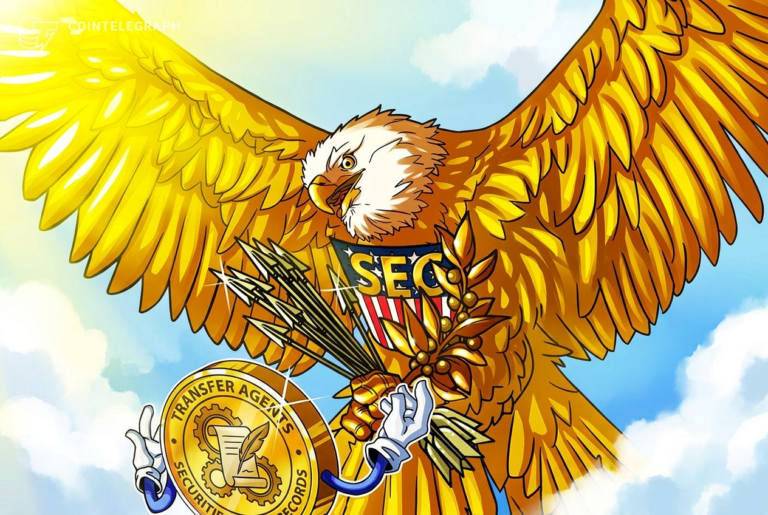
SEC Proposes New Standards for US Transfer Agents

0

The US Securities and Exchange Commission (SEC) has proposed overhauling decades-old rules governing transfer agents as blockchain-based recordkeeping and tokenized securities become more prominent in US markets.

The proposal would update requirements covering registration, recordkeeping, safeguarding and securities transfers, while introducing new rules aimed at risks emerging from increasingly digital and automated market infrastructure.

“Market participants are actively seeking to bring blockchain-native, or ‘onchain’ transfer agents into the U.S. market,” the SEC said, pointing to models for blockchain-based recordkeeping, tokenized fund administration and cross-chain interoperability.

The agency said its existing framework does not adequately address those developments, particularly risks involving cybersecurity, operational resilience and the safeguarding of securities and investor records.

Under the proposal, transfer agents would face expanded reporting requirements and new compliance standards, including rules governing restrictive legends on securities and the use of third-party service providers.

SEC’s proposed Transfer Agent Rules. Source: SEC

The SEC said its transfer agent rules have not been substantively updated since the late 1970s and early 1980s, when the industry still relied heavily on paper certificates and manual recordkeeping.

The regulatory agency is seeking public comment on the proposed changes, with comments due 60 days after the proposal is published in the Federal Register.

Related: CFTC chair says agency will move forward on crypto regulation if CLARITY fails

SEC pursues broader securities rule changes

The SEC is “on a mission to simplify its rules,” according to analysis from law firm Cahill Gordon & Reindel sent to clients on Tuesday.

In May, the SEC proposed three major changes to public-company rules. The proposals would allow companies to opt for semiannual reporting, simplify the existing filer classification system and expand access to streamlined registered securities offerings.

Last week, the SEC sent a proposed overhaul of custody rules for investment advisers and investment companies to the White House for review, with potential changes covering how firms hold crypto assets for clients. The changes could provide clearer standards for how investment advisers and funds custody digital assets while complying with federal securities rules.

Magazine: Does the Bitcoin rally mean we haven’t wasted our lives in crypto?

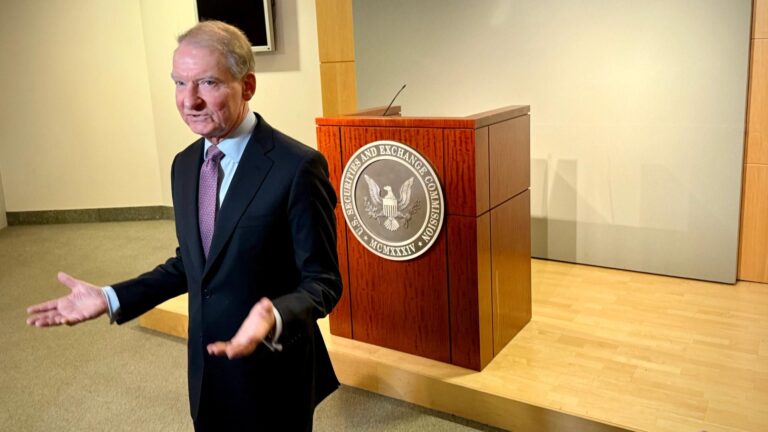
SEC proposes transfer agent rule, sets event to figure out round-the-clock U.S. trading

0

The U.S. Securities and Exchange Commission issued an agenda for its 24-trading roundtable and proposed a new transfer-agent rule with blockchain implications.

UK Crime Agency Froze $13.5M Amid Probe into Premier League Crypto Sponsor

0

Cointelegraph is committed to providing independent, high-quality journalism across the crypto, blockchain, AI, and fintech industries.

All news, reviews, and analyses are produced with full journalistic independence and integrity. For more details on our standards and processes, please read our Editorial Policy.

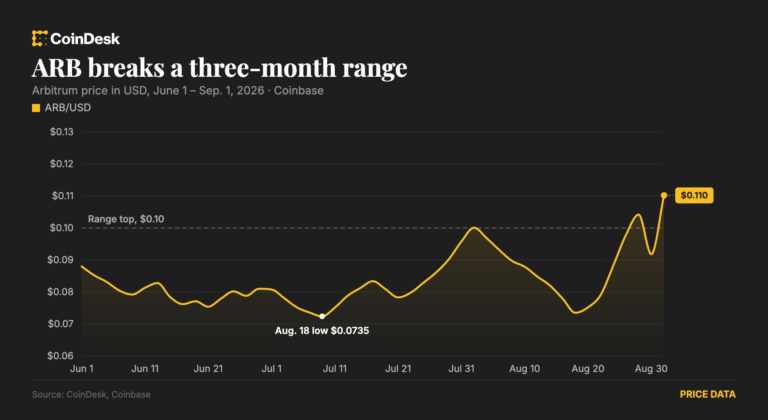
Robinhood's new crypto network is printing cash, and it's sending Arbitrum's token soaring

0

Revenue on Robinhood Chain hit a 24-hour record of $1.9 million, driving a 30% rally in ARB as traders chased downstream gains.

Crypto-Backed PAC Scales Back Ad Spending in Massachusetts Primary

0

An affiliate of the political action committee (PAC) Fairshake, which was responsible for pouring more than $130 million in ads and media in the 2024 election cycle, is supporting at least one candidate in Tuesday’s primary in Massachusetts.

According to Federal Election Commission (FEC) records as of Tuesday, the Protect Progress PAC, a Fairshake affiliate, spent just over $189,000 on media to support Representative Jake Auchincloss running for reelection in Massachusetts’ 4th congressional district. Some of the funds, according to Democratic candidate Jason Poulos, were used to create “AI-generated slop mailers” supporting Auchincloss ahead of the Massachusetts primary, scheduled for Tuesday.

In an Aug. 16 letter, Poulos called on the Democratic lawmaker to “publicly renounce” Protect Progress’ efforts to potentially influence the primary and general election. The candidate claimed Auchincloss had accepted $77,500 directly from “crypto-industry sources” since 2020, pointing to the Massachusetts lawmaker’s record in voting for the Digital Asset Market Clarity Act in July 2025 — a market structure bill not signed into law as it awaits consideration in the Senate.

Protect Progress PAC mailer supporting Jake Auchincloss. Source: Jason Poulos

The $189,000 in spending marked Fairshake’s latest attempt to influence the 2026 elections through media and ads unrelated to candidates’ positions on crypto and blockchain. After the PAC and its affiliates spent about $3.6 million on House and Senate races in Alaska, Florida and Wyoming in August, Fairshake reported having $122 million cash on hand ahead of the 2026 midterms.

“With dozens of wins in House and Senate races across the country, and $122 million ready for the fall, we’re not slowing down heading into November,“ Fairshake spokesperson Geoff Vetter said in August.

Massachusetts will be one of the last US states to hold primaries, with just over two months until the general election. New Hampshire, Rhode Island and Delaware are all scheduled to hold primaries in September.

Related: Kalshi issues first lifetime ban for Republican politician over insider bets

Cointelegraph is committed to independent, transparent journalism. This news article is produced in accordance with Cointelegraph’s Editorial Policy and aims to provide accurate and timely information. Readers are encouraged to verify information independently.

Citi, Goldman, other global banks and asset managers team up on stablecoin venture

0

The group will focus first on a U.S. dollar stablecoin for payments and digital asset settlement, with a euro token a priority for expansion.

Blockticity Moves Trade Records Tied to $7.7 Billion in Assets Onchain

0

  • Blockticity is moving more than 1 million authenticated trade records tied to $7.7 billion in goods onto decentralized storage network Walrus.
  • The partnership will preserve cryptographic proofs of certificates, laboratory reports and other supply-chain evidence, allowing businesses and regulators to verify that records have not been altered.

Blockticity is extending more than 1 million authenticated trade records representing $7.7 billion of goods onto Walrus, as the companies target one of global commerce’s persistent problems: proving that supply-chain documents are genuine.

The records include Certificates of Analysis, Certificates of Conformance, Certificates of Origin, laboratory reports and transportation documents. Blockticity says its system converts such records into tamper-evident evidence that can be independently verified. The platform currently protects $7.7 billion in verified products.

The integration does not mean $7.7 billion of physical assets are being tokenized on Walrus. Instead, cryptographic proofs and supporting evidence connected to those goods are being preserved so companies, regulators and trading partners can check whether documents have been altered.

Blockticity said its first records are already live on Walrus. It is working toward mirroring more than 15 terabytes of authenticated records and supporting evidence across five commercial verticals.

Why Trade Documentation Matters

The partnership targets a trade system that remains heavily dependent on documents moving between exporters, importers, laboratories, logistics companies, banks and customs authorities.

World merchandise exports reached $26.3 trillion in 2025, according to UN Trade and Development. An estimated 4 billion paper documents circulate through global trade each day, according to the World Economic Forum.

That dependence creates problems when documents need to be checked years after they were created.

Blockticity’s approach is designed to create a cryptographic record showing that a document presented later matches the version originally authenticated. Walrus adds decentralized storage and data-integrity infrastructure designed to keep that evidence available across independent storage nodes.

Walrus launched its mainnet in March 2025 with more than 100 storage nodes. The network uses erasure coding to distribute data while providing availability and integrity guarantees.

“Markets don’t need another self-reporting system. They need trusted evidence,” Blockticity CEO Mike Coner said in a statement shared with AlexaBlockchain. “Walrus strengthens that foundation by helping preserve the integrity of those authenticated records across independent infrastructure without exposing sensitive commercial information.”

There is an important technical distinction around that privacy claim.

Walrus data is publicly accessible by default and the storage protocol itself does not provide confidentiality. Sensitive information therefore has to be encrypted before being stored. Mysten Labs’ Seal system, for example, provides encryption and onchain access controls that can be paired with Walrus.

Regulation Is Increasing the Need for Verifiable Data

Governments are demanding more detailed information about products and their supply chains.

The European Union’s Carbon Border Adjustment Mechanism entered its definitive phase on January 1, requiring covered importers to report embedded emissions and ultimately surrender certificates. The bloc is also preparing Digital Product Passports that will progressively carry information about products, including regulatory compliance and sustainability data.

Implementation of the EU Deforestation Regulation is also moving forward, with its information system designed to handle due-diligence statements and declarations.

Those regimes increase the value of records whose origins and integrity can be independently checked.

“A trade certificate has to convince a customs officer in another jurisdiction, a decade from now, with no one left to vouch for it,” said Kostas Chalkias, co-founder and chief cryptographer at Mysten Labs. “Walrus makes that a property of the data itself: proof anyone can check, with contents that only authorized parties can view.”

Blockchain Trade Platforms Have Had Mixed Results

Blockticity and Walrus are not alone in trying to remove paper from global commerce.

Global Shipping Business Network has used blockchain infrastructure for electronic bills of lading, with more than 550,000 eBLs processed by mid-2025 across more than 100 countries. Yet UN ESCAP estimated electronic bills represented only about 2% to 5% of bills of lading in 2025, showing how slowly industry-wide digitization has progressed.

An earlier attempt provides another warning. IBM and Maersk shut down their TradeLens blockchain trade platform after concluding that it had failed to achieve the industry collaboration needed for commercial viability.

Blockticity has taken a narrower approach centered on authentication rather than replacing the entire trade workflow. Earlier this year, it worked with XDC Network on a Philippine cacao-export pilot in which authenticated trade documents could be validated across networks and used in trade-finance applications.

The Blockticity-Walrus partnership is therefore a test of whether decentralized storage can find a practical role in regulated commerce: not by moving the physical asset onchain, but by making the evidence behind it harder to alter and easier to verify.

The above article “Blockticity Moves $7.7 Billion of Trade Records Onto Walrus in Compliance Push” was first published on AlexaBlockchain. Read the complete article here: https://alexablockchain.com/blockticity-moves-trade-records-tied-to-7-7-billion-in-assets-onchain/

Read Also: This is the First U.S.-Chartered Depository Bank to Offer Stablecoin Invoicing

Disclaimer: The information provided on AlexaBlockchain is for informational purposes only and does not constitute financial advice. Read complete disclaimer here.

Gate AI, XYO Launch Head-to-Head Crypto Prediction Game

0

  • Gate AI and XYO launched Crypto Cards, a head-to-head crypto prediction game where users compete against another player or an AI model.
  • Players predict whether three selected crypto assets will rise or fall over a defined period.
  • Gate AI provides the AI predictions and real-time market data used to settle each match.

Gate AI has partnered with XYO to launch Crypto Cards, a head-to-head crypto prediction game. It pits users against another player or an AI model on the direction of crypto prices.

The format is different from conventional prediction markets such as Polymarket. Rather than buying contracts whose prices reflect the crowd’s implied probability of an event, participants take opposing views on whether the same assets will rise or fall over a defined period.

Each day, XYO randomly selects three crypto assets from a pool listed on Gate. Gate AI also produces its own forecasts, while players have 24 hours to submit directional calls and assign the assets to multiplier slots before results are revealed the following day.

Gate’s MCP supplies the live price data used to settle outcomes.

XYO Layer One records player selections before the prediction window opens. The blockchain, launched in September 2025, was designed around data verification and is used to create a permanent record that can later be checked against the final result. XYO says its broader decentralized infrastructure has grown to more than 10 million nodes.

“XYO Crypto Cards gives everyone a simple and engaging way to participate in market prediction. By combining AI technology with XYO Layer One’s verification infrastructure, we are creating a new type of interactive digital asset experience,” XYO Co-Founder and CEO Arie Trouw said in a statement shared with AlexaBlockchain.

More From AlexaBlockchain

Gate Expands Its Prediction-Market Push

The launch extends Gate’s push into prediction products.

Gate became the first centralized crypto exchange to integrate Polymarket on March 24, allowing users to access event-based markets from its app. The integration lets users trade Yes-or-No outcomes on areas including finance, sports and crypto.

In July, Gate launched Event Contracts, a separate product that lets users speculate on whether assets such as Bitcoin and Ether will rise or fall over short periods without traditional leverage or margin. The contracts initially included 5-minute, 15-minute, 1-hour and 4-hour windows.

Gate surpassed 50 million users milestone in March.

The timing reflects a broader surge in demand for prediction-based products.

Kalshi, Polymarket and Polymarket US generated a combined $50.59 billion in trading volume during July, an all-time monthly high and a 7.8% increase from June, according to data reported by The Block.

The Gate AI, XYO New Crypto Prediction Game, however, is structurally different from those markets.

Polymarket and Kalshi use tradeable contracts whose prices change as participants buy and sell, producing a continuously updated market-implied probability. Crypto Cards instead turns forecasting into a direct competition, with performance determined by realized asset prices rather than the consensus price of a contract.

That is important for exchanges exploring prediction products.

The model removes the need to build deep liquidity around every individual question and may make forecasting easier to package as a short-form consumer game. But it also means Crypto Cards does not produce the same crowd-based probability signal that gives conventional prediction markets much of their informational value.

The blockchain component addresses another issue: auditability.

Recording participants’ choices before the prediction period begins makes it possible to verify that forecasts were not altered after prices moved. The reliability of the final result, however, still depends on the integrity and methodology of the market-data feed used for settlement.

“At Gate US, we believe AI will play an increasingly important role in shaping the future of digital assets—not simply through individual features, but by enabling more intelligent connections between users, information, and digital asset ecosystems,” Gate US Chief Operating Officer Laura Liu said.

XYO and Gate AI said they are exploring additional applications combining AI, market intelligence and blockchain infrastructure.

Still, the announcement does not disclose entry fees, prize mechanics, geographic eligibility or dispute procedures. Those details will be important in determining whether Crypto Cards operates primarily as a game, a forecasting contest or a financial prediction product.

This clarification is crucial as prediction markets face increased regulatory scrutiny. A US appeals court ruled on Aug. 28 that Kalshi could not prevent Nevada from exercising oversight over its sports-related prediction contracts. This highlighs the unresolved regulatory boundaries around the rapidly expanding sector.

The above article “Gate AI, XYO Launch Head-to-Head Crypto Prediction Game” was first published on AlexaBlockchain. Read the complete article here: https://alexablockchain.com/gate-ai-xyo-launch-head-to-head-crypto-prediction-game/

Read Also: This is the First U.S.-Chartered Depository Bank to Offer Stablecoin Invoicing

Disclaimer: The information provided on AlexaBlockchain is for informational purposes only and does not constitute financial advice. Read complete disclaimer here.